
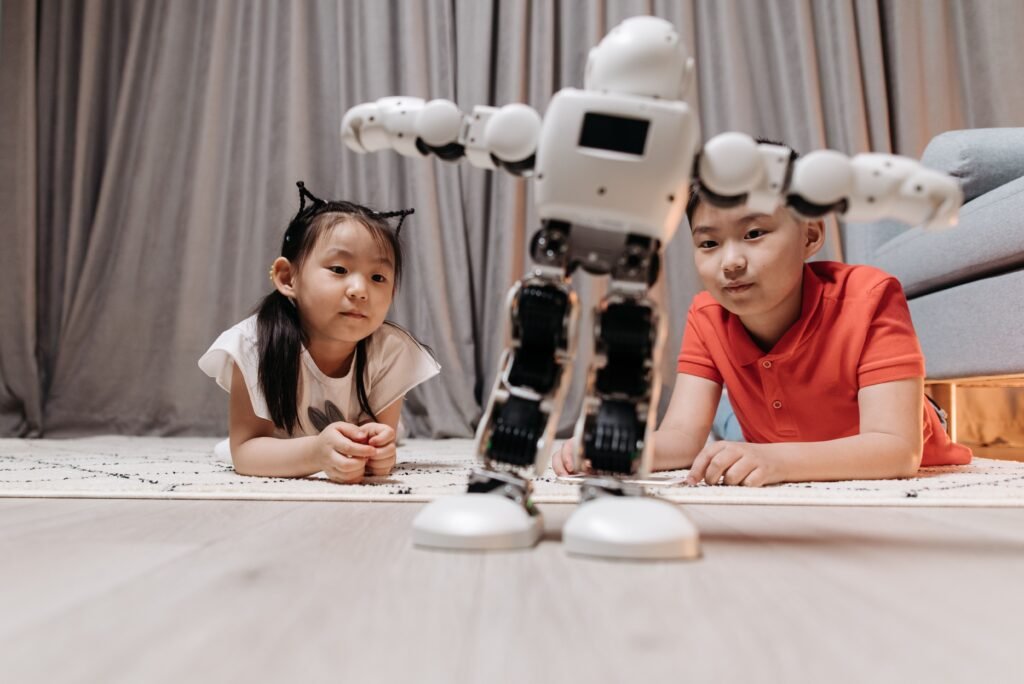
AI for Students: How Artificial Intelligence Can Support Learning
Artificial Intelligence is becoming an increasingly useful technology for students. Modern AI tools can help learners understand difficult concepts, organize their study time, practice skills, and find new ways to learn. When used responsibly, AI can work as a learning assistant and make studying more organized and interactive.
What Is AI for Students?
AI for students refers to artificial intelligence tools that can support different learning activities. These tools can explain topics, summarize information, create practice questions, help with writing, and provide ideas for projects.
Students can use AI to ask questions in simple language and receive explanations based on their learning needs. For example, if a student does not understand a difficult technology or science concept, an AI assistant can explain it step by step and provide simple examples.
AI for Understanding Difficult Topics
One of the most useful applications of AI is personalized explanations. Students do not always understand a topic from a textbook or classroom explanation on the first attempt.
AI can provide alternative explanations and examples. A student can ask for a topic to be explained in beginner-friendly language or request a practical example. This can make complex subjects easier to approach.
However, students should compare important information with their textbooks, teachers, and reliable educational sources. AI can sometimes make mistakes, so it should be treated as a helpful assistant rather than an unquestionable source.
AI for Study and Revision
AI tools can also help students prepare for exams and improve revision. Students can use AI to create practice questions, quizzes, summaries, and study notes from information they already understand.
For example, a learner studying history can ask for practice questions about a particular chapter. A programming student can use AI to generate exercises related to a programming concept and then attempt them independently.
This approach can make revision more active instead of simply reading the same material repeatedly.
AI for Writing and Research
Students often need to prepare assignments, presentations, and research projects. AI can help with brainstorming topics, organizing ideas, creating outlines, and improving the clarity of writing.
AI can also help explain unfamiliar terms and suggest questions that students can investigate further. However, students should do their own research and follow their school’s rules regarding AI use.
Using AI to understand a subject is different from submitting AI-generated work as if it were entirely your own. Learning should remain the main goal.
AI for Time Management
Managing schoolwork, homework, projects, and revision can be challenging. AI-powered productivity tools can help students create task lists and organize their available study time.
A student can divide a large project into smaller tasks and create a simple schedule. This can make the workload easier to manage and help students focus on one activity at a time.
Benefits of AI for Students
AI can provide several useful benefits for learners:
- Simple explanations of difficult topics
- Practice questions and quizzes
- Help with organizing study notes
- Brainstorming for projects
- Writing and language assistance
- Support with programming practice
- Better organization of study tasks
The effectiveness of these benefits depends on how students use the technology.
Responsible Use of AI
Students should use AI as a support tool rather than depending on it for every task. Thinking independently, solving problems, reading reliable sources, and discussing topics with teachers remain important parts of education.
Students should also avoid entering private or sensitive information into AI applications and should check their school’s policies before using AI for assignments.
The Future of AI in Education
AI is likely to become more common in education as learning platforms and digital tools continue to develop. Future systems may provide more personalized learning experiences and help students practice subjects according to their individual needs.
Used responsibly, AI can give students another way to explore ideas, practice skills, and organize their learning. The best results come when students combine AI assistance with their own curiosity, critical thinking, and effort.